- llms.txt и AI-поиск: что AI-краулеры на самом деле делают на сайте
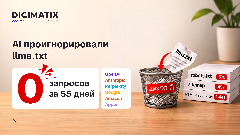
С развитием AI-поиска появляются новые рекомендации по оптимизации сайтов. Одна из них – создание файла llms.txt, который часто называют аналогом robots.txt для нейросетей. В этой статье мы – команда DIGIMATIX, ответим на вопрос, нужен ли файл llms.txt и какие факторы действительно влияют на видимость сайта в AI-поиске.
- Better AI Video Comes From Stricter Pre-Production, Not a Better Prompt Generator
The lucky pull habit
Open a generator, type a mood, watch four seconds of output, re-roll. This is how most people meet AI video, and it is easy to see why. Clips are short and a second attempt costs almost nothing, so re-rolling looks like the fast path to something good. Pull the lever enough times and something attractive appears.
The cost is hidden because it never shows up inside a single session. A clip that works after eleven attempts cannot be explained. You cannot say which line of the prompt made the light behave, which phrasing held the subject in frame, or why the camera drifted the way it did. So you cannot repeat it, and you cannot brief it to a teammate. The next video starts from zero, and the eleven attempts start again.
My reading is that this is the real divide among people making AI video now. The model is no longer the differentiator; almost anyone can reach a capable one. The differentiator is whether you can specify a shot before you generate it. That is a writing and planning skill, not a secret phrase.
Write the shot before you generate
A shot is a set of decisions, not a description of a mood. Subject, framing, camera move, duration, light, sound. Cinematic is not a decision; a slow push in on a stationary figure, lit from the left, held for eight seconds, is.
I have come to think prompts fail less often from bad wording than from decisions left unstated. When you write a dreamy atmosphere over a misty lake, the model fills in the rest for you: where the camera sits, whether it moves, how long the light holds. It often fills them in well enough to look pleasant and never well enough to be what you meant. The gap between a nice clip and a usable one is usually a decision you did not make and the model made for you.
So before opening any tool, I write four things down: one line of action, one camera instruction, one length, one sound intention. Who or what moves, and how. Where the camera is and what it does. Whether this is a four, an eight or a twelve second moment. And whether sound carries the shot or merely sits under it.
There is a practical test I keep returning to. If you cannot describe the shot to a colleague in a single sentence, the model cannot render it either. The sentence is not a limitation on your imagination; it is the brief.
Prompts as storyboards, not spells
This is where I part ways with the prompt library habit. A prompt generator earns its place only if it produces a structured document, with camera language, a timeline and sound design, rather than a longer list of adjectives. Length is not specificity. Twenty evocative words can carry fewer decisions than four plain ones.
Tools built this way are useful precisely because they force the missing decisions into the open. GenWorldAI is a reasonable illustration: its video prompt generator covers camera language, timeline and sound design, and its separate image prompt generator addresses lighting, composition, colour and style, which is the vocabulary you need before a still ever becomes a clip. The tool does not make the creative choice; it asks you for it in a form you can keep.
GenWorldAI also suits a specific kind of shot rather than every kind. It produces short cinematic clips of four, eight or twelve seconds, from a text prompt and up to two images. It handles image to video where a still has to keep a consistent character through the move, and it generates sound effects and music that sync to the picture, which matters when a sound has to land at a particular moment. It accepts images, video, audio and text together as references, and it downloads at up to 1080p without a watermark. For creators and small marketing teams working without filming or animation skills, those are the constraints a shot list has to respect anyway.
Aspect ratio belongs in that list of decisions, not at the end of it. Sixteen by nine, nine by sixteen, one by one and twenty-one by nine are four different framings of the same idea, and choosing late means re-deciding the shot late, after the prompt has already settled the composition.
The objection: this kills spontaneity
The strongest case against me is that randomness is the charm. Happy accidents produce images a storyboard would never have proposed, and the pleasure of the medium is partly the surprise of seeing something you did not ask for.
I do not want to remove the accident. I want to stage it. Generate the planned shot first, then generate uncontrolled variations around it: keep the subject and framing, change the light, or the move, or the pacing, and keep whichever result teaches you something. The plan gives you a stable base to wander from, and a way back.
The difference that matters is describability. An accident you can describe can be repeated, adjusted and built into the next shot. An accident you cannot describe is a one-off, however good it looks, and the cost of finding it again is another eleven pulls. I would rather own one accident than chase ten.
The honest concession is time. Planning adds a few minutes up front: writing the list, choosing the camera move, deciding the length. For a throwaway clip posted once to a small audience, that trade is not always worth making, and I would not pretend otherwise.
What to do this week
Write a five-shot list before touching any generator. For each shot, one line of action, one camera move, one length, one sound intention. No adjectives that do not correspond to a decision.
Then run the same shot twice with a single variable changed, the camera move or the light or the duration, and note which change actually moved the result. One variable at a time is the only way to learn what a given model responds to, and it converts vague impressions into something like knowledge.
Keep a prompt log: the shot decision, the prompt you wrote from it, and the output. After a dozen entries you have a record of your own choices, which is worth more than any borrowed prompt library because it is indexed to your intentions and your footage.
Only once a shot works should you scale it. That is the moment to reuse the camera instruction and the character description across the remaining shots in the sequence, and the moment the aspect ratio decision starts paying off across every platform you publish to. If you are drawing with a text prompt, a free tier through seedance-2ai.org is enough to test the habit on a few shots before committing to a longer list.
The pull of the lever is strong, and there is nothing wrong with a lucky clip. But luck stops being useful the moment you need a second one. Specifying the shot is the part of the work that transfers, from this video to the next, and from you to whoever you hand the brief to.
- Баг есть, но разработчик его не видит: как я научился описывать ошибки понятнее
Тестировщик находит ошибку, создаёт задачу, а разработчик отвечает, что проблема не воспроизводится. Разбираю, какие детали чаще всего теряются в баг-репортах, зачем указывать окружение и тестовые данные и как сократить лишнюю переписку между QA и разработчиками.
- Как проверить USDT TRC-20 на чистоту и риски
В условиях усиливающихся международных ограничений и санкций проверка USDT в сети TRC-20 на чистоту происхождения и возможные риски стала обязательной практикой. Особенно это актуально для россиян и белорусов: зарубежные биржи, платёжные сервисы и контрагенты всё чаще блокируют средства, связанные с санкционными списками, миксерами, даркнет-площадками или сомнительными источниками. Один подозрительный перевод может привести к заморозке кошелька, отказу в выводе или даже к проверкам со стороны комплаенс-служб.
Rabotaem!






0 active users